

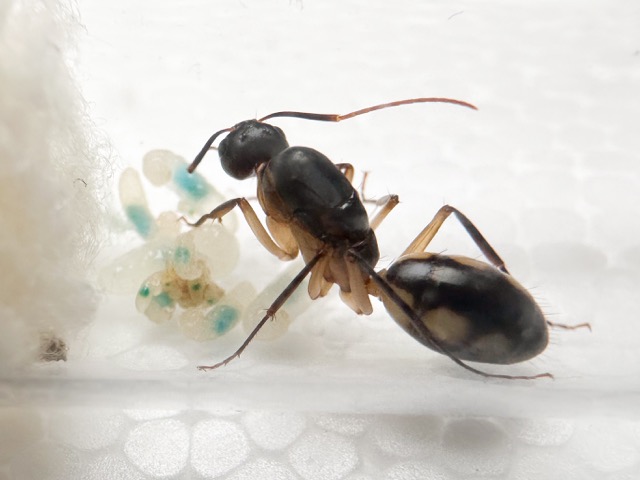
Camponotus maculatus (African)
From: £59.99
Description
Camponotus maculatus, commonly known as the Spotted Sugar Ant or African Carpenter Ant, is a remarkable species native to various regions of Africa. Known for their striking beauty and impressive size, these ants exhibit a spectacular yellowish-translucent colouration accented by dark, characteristic spots along their gaster.
As a highly polymorphic species, a mature colony is a hive of diverse activity. You will observe tiny minor workers tending to the brood, mid-sized media workers foraging, and massive, large-headed major workers defending the nest and dismantling larger prey. While they can be slightly timid in the founding stages, an established colony becomes highly active, exceptionally voracious, and fascinating to observe.
Care Guide
To ensure your Camponotus maculatus colony thrives, follow these essential care requirements:
Housing (Formicarium)
-
Nest Type: These ants are adaptable but prefer dry, well-ventilated setups. Terra nests are highly recommended. Wood or cork nests can also be used, simulating their natural habitat.
-
Outworld: Provide a spacious outworld for foraging, as they are an active species that loves to explore. A thin layer of dry sand or soil works perfectly as a substrate.
Temperature & Humidity
-
Nest Temperature: Maintain a warm gradient of 24°C to 28°C within the nest. Provide a heating cable or mat on one side of the formicarium to allow the ants to regulate their own temperature by moving their brood.
-
Outworld Temperature: Room temperature (21°C to 25°C) is sufficient for the foraging area.
-
Humidity: Keep the nest humidity relatively moderate, between 50% and 60%. Ensure a constant supply of fresh drinking water is available in the outworld via a test tube or liquid feeder.
Diet & Feeding
-
Carbohydrates: These ants require a constant source of energy. Provide sugar water, honey, or specialized ant nectars.
-
Protein: Crucial for the queen to lay eggs and for the larvae to grow. Offer freshly killed feeder insects such as mealworms, crickets, or fruit flies. Ensure you adjust the size of the prey to the size of the colony.
-
Frequency: Feed a small founding colony 1–2 times a week. Mature colonies will require feeding every 1–2 days. Always remove uneaten food after 24 hours to prevent mould.
Colony Behaviour & Development
-
Growth Rate: Founding queens can be slow to start, but once the first generation of workers (nanitics) arrives and the colony reaches around 20–50 workers, population growth becomes rapid.
-
Hibernation (Diapause): Coming from an African climate, Camponotus maculatus does not require strict winter hibernation. However, a slight drop in temperature for a few months during the winter can sometimes benefit the queen’s longevity and resting cycle.
-
Temperament: Generally peaceful when foraging but highly aggressive when defending their nest. The major workers possess powerful mandibles capable of easily tearing apart insect prey.
Additional information
| Colony size | Queen and 5-10w, Queen with brood |
|---|